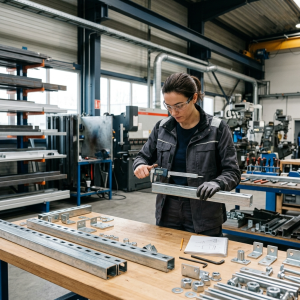
Manufacturing efficiency starts with organized tool and parts storage. Industrial storage cabinets with drawers transform chaotic workspaces into streamlined operations where every tool, component, and supply has a designated location that’s instantly accessible when needed. Unlike residential storage or generic shelving, professional-grade drawer cabinets handle the heavy tools, precision parts, and demanding conditions that define industrial environments.
From small repair shops to large manufacturing facilities, from maintenance departments to assembly lines, the right drawer cabinet system reduces search time, prevents lost inventory, improves workflow efficiency, and enhances workplace safety. Understanding the different cabinet configurations available, how drawer capacities align with your storage needs, and which features deliver the best return on investment helps you create organized workspaces that boost productivity while protecting your valuable tools and inventory. This comprehensive guide explores everything you need to know about selecting, configuring, and implementing industrial storage cabinets with drawers that meet your specific operational requirements.
Why Industrial Storage Cabinets with Drawers Transform Workplace Efficiency
The Productivity Cost of Disorganized Tool Storage
When technicians spend five minutes searching for tools on every job, those minutes compound into hours of lost productivity each week. Multiply this across a workforce, and disorganized storage costs thousands of dollars in wasted labor annually. The actual expense extends beyond direct labor time—frustrated employees work less efficiently, tool damage increases when items aren’t properly stored, and missing tools get replaced unnecessarily because no one can find them in cluttered storage areas.
Organized drawer storage eliminates these productivity drains. When every tool has a designated location marked and maintained, retrieval becomes automatic. Technicians spend seconds instead of minutes finding what they need, keeping work flowing smoothly. This efficiency gain appears in every task, every day, creating cumulative productivity improvements that justify storage system investments many times over.
How Proper Storage Reduces Search Time and Improves Workflow
Drawer cabinets create a systematic storage approach where items are categorized, located consistently, and accessed quickly. Instead of digging through toolboxes or searching multiple locations, workers open the appropriate drawer and immediately locate needed items. This systematic organization becomes particularly valuable during complex jobs requiring multiple tools—everything needed sits in known locations rather than scattered across workspaces.
The psychological impact of organized storage affects workflow beyond direct time savings. Workers approach tasks with confidence when they know tools are available and accessible. This confidence translates into better focus on actual work rather than constant worry about finding equipment. The improved mindset contributes to quality work and better problem-solving as attention stays focused on the job rather than logistics.
Safety Benefits of Organized Industrial Storage
Disorganized storage creates safety hazards beyond obvious trip hazards from items left on floors. Tools stored improperly can fall when drawers or cabinets open, creating injury risks. Sharp tools mixed with other items lead to cut injuries during retrieval. Heavy items stored at inappropriate heights create strain injuries when workers struggle to move them.
Properly configured drawer cabinets address these safety concerns systematically. Heavy items go in lower drawers where lifting heights are minimal. Sharp or hazardous tools separate into dedicated drawers with appropriate organization. Full-extension drawer slides prevent items from shifting or falling during access. The cumulative effect creates safer workplaces where storage-related injuries become rare rather than routine.
ROI Calculation for Storage System Investment
Quantifying storage system ROI starts with measuring current productivity losses. Track how much time employees spend searching for tools, replacing lost items, or dealing with damaged equipment from improper storage. Convert these time costs into dollar amounts using actual labor rates. The resulting numbers often reveal that even expensive storage systems pay for themselves within months through productivity improvements alone.
Additional ROI factors include reduced tool replacement costs when items are properly stored and maintained, decreased worker compensation claims from storage-related injuries, and improved quality from having correct tools readily available. Some benefits like improved employee morale and reduced frustration resist precise quantification but contribute real value to workplace performance. Conservative ROI calculations that ignore these soft benefits still typically show positive returns within one to two years.
What Makes Industrial Storage Cabinets Different from Consumer Products?
Heavy-Duty Construction and Load Capacity
Industrial cabinets handle loads that would destroy consumer-grade storage. Professional drawer cabinets support hundreds of pounds per drawer without sagging or binding, using heavy-gauge steel construction and reinforced drawer structures. This capacity matters when storing power tools, heavy parts, or dense materials like fastener inventory that quickly exceeds lightweight cabinet ratings.
The cabinet frame itself must support the cumulative weight of fully loaded drawers plus resist the dynamic loads from repeated drawer operation. Industrial cabinets use welded or heavy-duty bolted construction that maintains rigidity under full load. Consumer cabinets often rely on thin materials and mechanical fasteners that loosen over time, leading to racking and eventual failure in demanding applications.
Drawer Suspension and Bearing Systems
Drawer slide quality separates industrial cabinets from consumer alternatives. Industrial slides use ball bearing or roller bearing systems that operate smoothly under heavy loads through thousands of cycles. Full-extension slides allow complete drawer access without items trapped at the back. The smooth operation matters not just for convenience but for safety—jerky drawer movement causes items to shift and can trap fingers or hands.
Premium slide systems include features like hold-open detents that keep drawers extended during access, soft-close mechanisms that prevent slamming, and positive latching that prevents drawers from opening unexpectedly. These refinements contribute to both safety and usability in daily operations. While they increase cabinet costs, the operational benefits justify the investment in professional environments.
Locking Mechanisms and Security Features
Tool security matters in industrial settings where valuable equipment represents significant investment. Industrial cabinets provide locking mechanisms ranging from simple key locks through electronic access control systems. These security features protect against theft while controlling access to specialized tools, calibrated instruments, or hazardous materials requiring restricted access.
Security features must balance protection with accessibility for authorized users. Overly complex security frustrates legitimate users and may lead to workarounds that defeat security entirely. The best systems provide straightforward access for authorized personnel while effectively excluding unauthorized access. Electronic systems can track who accessed what equipment and when, providing accountability that simple key locks can’t offer.
Durability in Harsh Industrial Environments
Industrial environments expose cabinets to conditions that would quickly degrade consumer products. Temperature extremes, humidity, dust, chemical exposure, and physical abuse from moving equipment all challenge cabinet durability. Industrial cabinets use powder-coat finishes, sealed bearing systems, and corrosion-resistant materials that withstand these conditions through decades of service.
Durability extends beyond just surviving harsh conditions to maintaining functionality. Drawer slides must operate smoothly despite accumulated dust. Locks need to function reliably despite exposure to lubricants or solvents. Finishes should resist chipping and scratching from rough handling. This sustained performance under adverse conditions justifies the premium prices of industrial-grade cabinets over superficially similar consumer products.
What Are the Main Types of Storage Cabinets with Drawers?
Stationary Floor Cabinets for Permanent Locations
Stationary floor cabinets provide maximum storage capacity and stability for permanent installations. These cabinets typically stand 30-72 inches tall, offering anywhere from 5 to 15 drawers depending on configuration. The fixed installation allows maximum weight capacity since the cabinet doesn’t need to accommodate mobility hardware or maintain stability while moving.
Stationary cabinets suit central tool cribs, permanent work cells, or anywhere storage remains in one location long-term. Their capacity advantages and lower cost compared to mobile units make them economical for general storage needs. The lack of mobility becomes a non-issue when work comes to the storage location rather than moving storage to work locations.
Mobile Cabinets for Flexible Workspace Organization
Mobile cabinets incorporate heavy-duty casters that allow repositioning as work demands change. This mobility proves valuable in dynamic manufacturing environments where work locations shift, during maintenance operations requiring tools at various locations, or in job shops where each project needs different tool sets. The casters typically include locking mechanisms that secure the cabinet in place during use.
Mobile cabinets trade some capacity and stability for flexibility. They’re generally shorter and narrower than stationary units to maintain stability while moving, and per-drawer capacity may be reduced to prevent top-heavy loading that creates tipping hazards. Despite these limitations, mobile cabinets deliver unique value in applications requiring storage flexibility.
Workbench-Integrated Cabinet Systems
Workbench-integrated cabinets combine work surfaces with drawer storage, creating complete workstations where tools and parts are immediately at hand. These systems maximize space efficiency by eliminating separate work and storage areas. The integration also improves workflow since workers never need to leave the workstation to access tools or supplies.
Configuration options for integrated systems range from simple bench tops with cabinets underneath to elaborate workstations with overhead storage, task lighting, and power distribution. The sophistication level should match your work requirements—simple assembly tasks need basic configurations while complex repair or fabrication work benefits from comprehensive workstation features.
Wall-Mounted Drawer Units for Space Optimization
Wall-mounted drawer units utilize vertical space without consuming valuable floor area. These units work well for small parts storage, frequently used hand tools, or supplemental storage near work areas. The wall mounting requires adequate structural support but provides excellent accessibility and visibility for stored items.
Weight capacity for wall-mounted units depends on both the cabinet construction and the wall’s load-bearing capacity. Verify that your wall structure can support fully-loaded cabinet weight before installation. Heavy loads might require supplemental wall reinforcement or bracket systems that distribute loads to multiple wall studs or structural elements.
Modular Systems for Custom Configurations
Modular cabinet systems use standardized components that you can arrange and reconfigure as needs change. This flexibility allows starting with basic storage and expanding over time without replacing existing cabinets. Modular systems typically include various cabinet widths, heights, and drawer configurations that combine to create custom storage solutions matching your specific requirements.
The initial cost of modular systems often exceeds purpose-built cabinets, but the long-term flexibility can justify the premium. As your operation grows or changes, you add compatible components rather than starting over with entirely new storage systems. This adaptability particularly benefits growing businesses or operations with frequently changing storage needs.
How Do You Determine the Right Cabinet Size and Configuration?
Workspace Assessment and Layout Planning
Effective cabinet selection starts with thoroughly assessing your workspace and workflow. Map out where work occurs, how materials and tools move through your space, and where storage provides maximum convenience. Storage positioned along logical workflow paths reduces walking distance and keeps work flowing smoothly. Cabinets placed in inconvenient locations get ignored while workers improvise closer but inadequate storage alternatives.
Consider future needs during assessment. Growing operations need storage capacity to expand, and evolving work processes may change storage requirements. Building in expansion capacity during initial installation costs less than major reorganizations later. Even if you don’t fill all drawers immediately, having capacity available prevents storage shortages that disrupt operations.
Drawer Quantity and Size Selection
Drawer configuration dramatically affects storage utility. Many small drawers suit operations with diverse small items requiring organization. Fewer large drawers accommodate bulky tools or consolidated storage of related items. Most facilities benefit from mixed configurations with various drawer sizes matching different storage needs.
Avoid the temptation to maximize drawer count by using only small drawers. While this seems to provide maximum flexibility, drawers that are too small for your actual items force awkward stacking or result in underutilized capacity. Similarly, using only large drawers wastes space and makes organization difficult. Analyze what you’re actually storing and match drawer sizes to real items, not theoretical possibilities.
Height and Width Considerations
Cabinet height affects accessibility and storage capacity. Taller cabinets maximize storage per square foot of floor space but may put upper drawers beyond comfortable reach for some workers. Cabinets exceeding 60 inches height often need step stools for top drawer access, creating safety concerns and reducing convenience. Consider your workforce’s physical characteristics when selecting heights.
Width considerations balance storage capacity against walkway space and door clearances. Wider cabinets store more but may block aisles or prevent drawer opening in tight spaces. Measure actual available space carefully, accounting for drawer extension, door swing, and workers needing to access cabinets simultaneously. A cabinet that technically fits a space may not function well if it creates circulation or access problems.
Weight Capacity Requirements
Calculate actual weight requirements for each drawer based on what you’re storing. Hand tools, power tools, fasteners, and parts all have different weight characteristics. Dense items like steel fasteners or castings can quickly exceed drawer ratings if you’re not careful. Verify that selected cabinets provide adequate capacity for your heaviest drawers with appropriate safety margins.
Don’t assume you can fully load every drawer to its maximum rating. The cabinet’s total weight capacity limits how many drawers you can load simultaneously. Distributing heavy items across multiple drawers and mixing heavy and light storage prevents exceeding overall cabinet capacity. This load distribution also improves stability and drawer operation by preventing overloaded drawers from binding or causing the entire cabinet to become unstable.
What Drawer Configurations Are Available?
Shallow Drawers for Small Parts and Precision Tools
Shallow drawers typically 2-4 inches high excel at organizing small parts, precision measuring tools, and items that would get lost in deeper drawers. The shallow height makes contents visible at a glance, eliminating digging through stacked items. These drawers suit operations with many small components like fasteners, electronic components, or precision instruments requiring careful organization.
Maximize shallow drawer utility with dividers or foam organizers that create designated locations for each item. Without organization, shallow drawers become jumbled messes where small parts mix together. The investment in proper organization transforms shallow drawers into highly efficient storage that keeps small items sorted and immediately accessible.
Medium-Depth Drawers for Hand Tools and Components
Medium-depth drawers in the 4-8 inch range handle most hand tools, common parts, and general shop supplies. This versatile size accommodates everything from wrench sets to drill bits to commonly used components. Medium drawers provide the flexibility to store diverse items without the space waste of oversized drawers or the cramming problems of undersized ones.
Most cabinet configurations include primarily medium-depth drawers since they handle the broadest range of industrial storage needs. You can always add dividers to segregate smaller items or remove dividers to accommodate larger items as needs change. This adaptability makes medium drawers the workhorse of industrial storage systems.
Deep Drawers for Power Tools and Bulky Items
Deep drawers exceeding 8 inches in height accommodate power tools, large assemblies, or bulky materials that won’t fit in shallower storage. These drawers handle items like grinders, drills, air tools, or fabricated components requiring protected storage. The depth allows standing items upright or stacking related components together in ways that shallow drawers can’t support.
Limit deep drawer quantity since they consume cabinet height quickly. One or two deep drawers in a cabinet handle bulky item storage while preserving space for additional shallower drawers with better organization for smaller items. Cabinets with too many deep drawers waste capacity by forcing items into drawers much larger than necessary.
Full-Extension Versus Partial-Extension Slides
Full-extension drawer slides allow pulling drawers completely out of the cabinet, providing access to items at the very back. This complete access matters when drawers are fully loaded or when you need to see everything at once. Partial-extension slides only pull out 75-80% of drawer depth, leaving the rear portion inside the cabinet where items can become difficult to reach or hidden from view.
Full-extension slides cost more but deliver significant usability advantages in professional settings. The complete access speeds item retrieval, prevents items from getting lost at drawer backs, and improves visibility for inventory management. Unless budget constraints force compromises, specify full-extension slides for industrial applications where the added cost is minimal compared to the operational benefits.
Drawer Divider and Organization Accessories
Drawer organization accessories transform empty drawers into efficient storage systems. Adjustable dividers create compartments for different items, preventing mixing and maintaining order. Foam organizers with custom cutouts provide exact positions for specific tools, making missing items immediately obvious. Bin systems with removable containers allow taking parts directly to work locations while maintaining drawer organization.
Invest in quality organization accessories rather than trying to improvise solutions. Purpose-designed drawer dividers adjust easily and secure firmly, maintaining organization despite daily use. Foam organizers protect tools while providing visual inventory management. Removable bins withstand repeated handling without breaking. Quality accessories cost more initially but deliver value through years of reliable use.
Which Storage Cabinets Work Best for Manufacturing Operations?
Assembly Line Tool Storage Solutions
Assembly line operations benefit from storage positioned directly at workstations where tools are needed. Mobile cabinets allow repositioning as line layouts change, while workbench-integrated systems create complete workstations with all needed tools immediately accessible. The goal is minimizing time workers spend away from actual assembly work while ensuring proper tools are always available.
Assembly line storage typically emphasizes shallow and medium-depth drawers since most assembly tools are relatively compact. Organize drawers by operation or by tool type depending on your workflow. Process-based organization groups everything needed for specific operations together, while tool-type organization suits flexible operations where workers perform varied tasks.
CNC Machine Tool Organization
CNC operations require organized storage for cutting tools, toolholders, measuring instruments, and machine accessories. These items often represent significant investment and require protection from damage and contamination. Drawer cabinets positioned near machines provide secure, organized storage while keeping tooling immediately accessible for setup and changeover operations.
Consider specialized drawer liners or foam organizers that protect precision tooling from damage. Cutting tools with sharp edges need individual positions that prevent contact damage. Measuring instruments require cushioned storage protecting calibration. The investment in proper organization accessories pays for itself by extending tool life and maintaining precision.
Quality Control Equipment Storage
Quality control equipment requires storage protecting calibration and preventing damage. Measuring instruments, testing equipment, and inspection tools need controlled environments away from production area contamination. Dedicated cabinets for quality control equipment create organized storage while signaling these items require special handling.
Quality equipment storage should include features like lock-in-lock controls limiting access to trained personnel, foam organizers protecting delicate instruments, and clear identification showing calibration status and due dates. This systematic approach to quality equipment storage maintains instrument accuracy while controlling access to expensive, specialized tools.
Production Supply Staging Cabinets
Staging cabinets near production areas store consumables, fasteners, and supplies used during manufacturing. These cabinets keep materials organized and accessible while providing inventory visibility that supports replenishment planning. Drawer organization with labeled compartments prevents mixing similar items and makes usage tracking straightforward.
Size staging cabinet capacity to match actual consumption rates. Excessive storage ties up capital in inventory, while inadequate capacity creates frequent stockouts disrupting production. Monitor usage patterns and adjust storage quantities to maintain adequate buffer stock without carrying excessive inventory.
What Cabinet Features Do Maintenance Departments Need?
Mobile Cabinets for Equipment Access
Maintenance work occurs throughout facilities at equipment locations rather than fixed workstations. Mobile cabinets allow bringing complete tool sets to work locations, eliminating constant trips back to central tool storage. This mobility dramatically improves maintenance efficiency by keeping technicians working rather than walking.
Organize mobile maintenance cabinets by trade or by system type depending on your maintenance structure. Electrical maintenance might have dedicated cabinets with electrical tools and testing equipment, while mechanical maintenance has separate cabinets with mechanical tools and lubrication supplies. This specialization ensures each technician has needed tools without carrying unnecessary items.
Heavy-Duty Drawers for Large Tools
Maintenance work involves heavy tools like large wrenches, pullers, lifting equipment, and power tools exceeding typical cabinet capacities. Specify cabinets with heavy-duty drawer slides and reinforced construction handling these substantial loads. Maintenance cabinets typically need higher capacity ratings than general manufacturing storage.
Distribute heavy items strategically across available drawers. Placing all heavy tools in bottom drawers seems intuitive but creates access problems requiring constant bending. Spreading heavy items across various drawer heights maintains manageable drawer weights while providing better ergonomic access during tool retrieval.
Parts Organization Drawer Systems
Maintenance operations require extensive parts inventory for repairs and preventive maintenance. Organized drawer storage with dividers or bin systems keeps parts sorted by equipment, by type, or by size depending on your maintenance approach. Clear labeling and logical organization help technicians find needed parts quickly during repairs when equipment downtime costs mount rapidly.
Integrate parts storage with your computerized maintenance management system where possible. Barcode labels or RFID tags enable tracking parts usage, automating reorder triggers, and maintaining accurate inventory records. This integration transforms parts cabinets from passive storage into active inventory management tools supporting overall maintenance effectiveness.
Security Features for Controlled Access
Maintenance tools and equipment represent substantial investment requiring protection. Locking cabinets with key control or electronic access systems prevent unauthorized tool removal while providing accountability for expensive specialized equipment. This security becomes particularly important for portable tools that could easily disappear without controlled access.
Electronic access control systems provide usage tracking showing who accessed what equipment when. This accountability helps with tool management, supports maintenance planning, and enables investigating missing or damaged tools. The data from access systems can reveal usage patterns guiding decisions about tool inventory levels and distribution.
How to Organize Drawer Contents for Maximum Efficiency
Drawer Assignment Strategies by Tool Type
Organizing drawers by tool type groups similar items together for intuitive retrieval. All wrenches in one area, all sockets in another, all measuring tools in a third location. This organization works well for general-purpose tool storage where workers need varied tools for different tasks. The logical groupings make unfamiliar items easy to locate since workers know which drawer category contains needed tools.
Within tool-type drawers, organize items by size, frequency of use, or other logical criteria. Socket sets arranged by size allow quick selection of correct sizes. Wrenches organized from smallest to largest speed retrieval. Frequently used items toward the front of drawers improve access speed. These sub-organization strategies compound efficiency gains from primary organization by tool type.
Foam Organizer and Divider Systems
Foam organizers with custom cutouts provide exact positions for each tool, making missing items immediately obvious. The visual inventory control helps prevent tools from disappearing and makes daily inventory checks quick and effective. Foam also protects tools from damage by preventing contact between items during drawer operation.
Creating custom foam organizers requires initial investment in time or professional foam cutting services. This investment pays off through improved organization lasting years. For frequently changing tool sets, adjustable divider systems provide flexibility without the commitment of custom foam. Match organization method to your stability of tool inventory and budget for organization systems.
Label and Identification Methods
Clear labeling transforms organized cabinets into efficient systems anyone can use. Label drawers with contents descriptions, part numbers, or category identifiers depending on your needs. Interior labels identify specific positions or compartments within drawers. Consistent labeling across all storage creates a standardized system that workers learn quickly.
Use durable labels that survive industrial environments. Laminated labels resist oil, solvents, and abrasion better than paper labels or permanent marker. Color-coding can supplement text labels, providing visual cues that speed recognition. For operations with workers speaking different languages, pictorial labels or standardized symbols may communicate more effectively than text.
Inventory Management Integration
Linking drawer storage to inventory management systems enables automated tracking, reorder triggers, and usage analysis. Barcode systems, RFID tags, or manual logging capture when items are removed or returned. This data supports procurement decisions, identifies high-use items requiring increased stock, and reveals underutilized inventory consuming storage space and capital.
Inventory integration sophistication should match your operation’s complexity. Simple operations might need only basic spreadsheet tracking. Larger facilities benefit from dedicated inventory management software linking storage locations to procurement, maintenance management, and financial systems. Right-size your inventory management to deliver value without creating administrative burden exceeding benefits.
What Security and Access Control Options Exist?
Keyed Locking Systems
Traditional keyed locks provide basic security for tool and supply cabinets. Master key systems allow management access to all cabinets while restricting general worker access to specific areas. Key control becomes critical—lost or copied keys defeat security entirely. Implement check-in/check-out systems for keys and rekey locks when key control is compromised.
Keyed locks suit operations where security needs are moderate and electronic systems aren’t justified. The simple operation requires minimal training, and there are no batteries or electronics to fail. Maintenance consists of periodic lock lubrication. For basic tool security in relatively controlled environments, traditional key locks remain cost-effective solutions.
Electronic Locks and Access Tracking
Electronic lock systems use PIN codes, proximity cards, or biometric identifiers controlling cabinet access. These systems log every access event, recording who opened what cabinet when. The audit trail supports accountability, helps investigate missing items, and provides usage data guiding inventory decisions. Access privileges update centrally without physical key exchanges when personnel change.
Electronic systems require power, either through facility wiring or battery operation. Battery systems avoid wiring costs but require periodic battery replacement. Consider maintenance requirements and life-cycle costs when evaluating electronic versus mechanical locks. The enhanced functionality justifies higher costs in applications where access tracking and flexible access control deliver significant value.
Individual Drawer Locks Versus Master Locks
Individual drawer locks allow securing specific drawers containing valuable or sensitive items while leaving other drawers accessible. This selective security suits situations where not all stored items require protection. Expensive specialized tools, calibrated instruments, or controlled substances lock separately while general tools remain openly accessible.
Master locking systems secure entire cabinets with a single lock, simplifying access control at the cost of selectivity. Master locks work well when security needs are uniform across all cabinet contents. The reduced hardware complexity lowers costs and simplifies operation compared to individual drawer locks. Match locking approach to your actual security requirements rather than over-engineering solutions.
Tamper-Resistant Hardware
Security hardware includes features resisting forced entry or tampering. Reinforced door edges prevent prying, anti-drill lock cylinders resist drilling attacks, and hardened hasps resist cutting. These features matter when cabinets store high-value items or when security threats include determined theft attempts rather than just opportunistic pilferage.
Balance security features against actual threats and item values. Excessive security costs money and creates user frustration without delivering proportional benefits. Assess realistic security needs considering what’s being protected, who has access, and consequences of losses. This risk-based approach to security specifications ensures appropriate protection without unnecessary expense or inconvenience.
How Do You Maintain Industrial Storage Cabinets?
Drawer Slide Lubrication and Maintenance
Drawer slides require periodic lubrication maintaining smooth operation. Quality slides use sealed bearings needing minimal maintenance, but accumulated dust and debris can impede operation over time. Clean slides periodically with compressed air or solvent, then apply appropriate lubricant per manufacturer specifications. This simple maintenance preserves drawer operation through years of service.
Avoid over-lubricating slides since excess lubricant attracts dust creating sludge that impedes rather than aids operation. Light oil or dry lubricant typically works best for drawer slides. Heavy grease attracts contaminants and may prevent slides from fully extending or retracting smoothly. Follow manufacturer recommendations for lubricant type and application frequency.
Load Capacity Monitoring
Monitor drawer loading to prevent exceeding capacity ratings. Overloaded drawers damage slides, create binding, and may cause drawer collapse. Train users on capacity limits and implement checks ensuring drawers aren’t progressively loaded beyond ratings as items accumulate. Periodic drawer inventory provides opportunities to verify loading stays within specifications.
Watch for signs of overloading like difficult drawer operation, binding, or sagging. These symptoms indicate immediate attention needed before damage becomes severe. Redistribute contents to lighter-loaded drawers or remove items that aren’t needed in active storage. Addressing overloading promptly prevents drawer failure and extends cabinet service life.
Lock and Hardware Inspection
Locks and hardware require periodic inspection ensuring proper function. Test locks regularly verifying smooth operation and positive latching. Loose hardware gets tightened before it falls off entirely. Damaged handles or pulls are replaced promptly. These simple maintenance tasks prevent minor problems from becoming major repairs requiring cabinet downtime or component replacement.
Keep spare lock cores, handles, and common hardware on hand for quick repairs. Waiting for special-order parts extends downtime unnecessarily. A modest investment in common spare parts enables immediate repair of most problems, keeping cabinets in service continuously. Document maintenance activities tracking what was done when, building a service history helping predict future maintenance needs.
Finish Care and Protection
Cabinet finishes resist industrial environments but still benefit from basic care. Clean cabinets periodically with mild soap and water, removing accumulated oil, dust, and grime. Avoid harsh solvents or abrasives that damage protective finishes. Touch up scratches or chips with matching paint preventing corrosion from starting at damaged spots.
Finish maintenance extends cabinet life by preserving corrosion protection and maintaining appearance. Well-maintained cabinets reflect positively on your overall facility management. The modest time investment in finish care pays dividends through extended service life and sustained professional appearance even in demanding industrial environments.
What Are Common Cabinet Selection Mistakes?
Undersizing Capacity for Actual Needs
Buying inadequate storage capacity creates immediate problems that persist throughout cabinet service life. Overcrowded drawers become disorganized, items get damaged from cramming, and retrieval becomes time-consuming as workers dig through overstuffed drawers. The money saved buying smaller cabinets gets consumed quickly by ongoing operational inefficiencies.
Estimate storage needs conservatively, adding capacity margin for growth and unforeseen requirements. Empty drawer space costs far less than discovering you need additional storage after occupying all available space. Many operations find they initially underestimate storage needs because they don’t account for backup tools, seasonal items, or supplies maintained for emergency needs.
Inadequate Drawer Weight Ratings
Selecting cabinets without verifying drawer weight capacity for actual loads creates failures waiting to happen. Collapsed drawers damage contents, create safety hazards, and require expensive repairs. Drawer slides rated for light duty fail quickly under heavy tool loads, necessitating component replacement much sooner than properly specified equipment.
Calculate realistic drawer loads including tools, parts, and supplies you’ll actually store. Add safety margin accounting for gradual accumulation as drawers fill over time. Verify selected cabinets provide adequate capacity for your heaviest anticipated loads. The modest incremental cost of higher-capacity cabinets prevents expensive failures and operational disruptions.
Poor Quality Bearing Systems
Cheap drawer slides create ongoing problems through rough operation, premature wear, and eventual failure. Low-quality slides bind under load, wear rapidly, and may collapse without warning. The frustration of fighting sticky drawers daily far exceeds any initial savings from choosing economy slides over quality bearing systems.
Insist on quality ball-bearing or roller-bearing drawer slides rated for industrial applications. These slides operate smoothly under full load through thousands of cycles. The reliability and smooth operation justify higher initial costs many times over through better functionality and longer service life. Consider slides as critical components deserving investment equal to cabinet structure itself.
Insufficient Security Features
Underestimating security needs leads to tool losses and accountability problems. Cabinets without locks or with easily defeated locks fail to protect valuable equipment. The losses from stolen or misappropriated tools often exceed the cost of proper security features within months of installation.
Assess security needs realistically considering what you’re storing and who has access. Expensive specialized tools, precision instruments, or controlled substances warrant robust security. General hand tools in restricted-access facilities may need minimal security. Match security features to actual threats and item values rather than either over-securing or leaving valuable items unprotected.
How to Calculate ROI on Storage Cabinet Investment
Time Savings Quantification
Measure current time spent searching for tools and supplies, multiply by worker hourly costs, then project annual savings from organized storage. Even conservative estimates typically show significant returns. Five minutes saved per worker per day multiplied across your workforce and work year produces impressive annual dollar savings justifying substantial storage investments.
Track actual time savings after implementing new storage to verify projected benefits. This verification supports future investment decisions and demonstrates storage system value to management. Documented productivity improvements transform storage from expense into strategic investment improving operational efficiency.
Inventory Loss Reduction
Calculate current tool replacement costs from lost, stolen, or damaged items. Organized secure storage dramatically reduces these losses by providing designated locations where missing items become immediately obvious and security features deter theft. Annual savings from reduced replacement costs often exceed storage system costs within a few years.
Track replacement purchases before and after new storage implementation to quantify actual savings. The data demonstrates storage system value while revealing ongoing inventory management improvements. Some facilities discover they were replacing far more tools than realized before organized storage made losses visible and preventable.
Safety Incident Prevention
Storage-related injuries from falls, cuts, and strains create both human and financial costs. Organized drawer storage eliminates trip hazards from items on floors, prevents cut injuries from digging through mixed tools, and reduces strain injuries from awkward lifting. While difficult to quantify precisely, reduced injury rates contribute measurable value through lower workers compensation costs and decreased lost-time injuries.
Document baseline injury rates before new storage, then track changes afterward. Even if improved storage isn’t the sole factor in reduced injuries, demonstrated improvement supports storage investment decisions. Safety improvements also enhance workplace morale and recruitment—workers prefer facilities demonstrating concern for their wellbeing through proper equipment and organization.
Productivity Improvement Measurement
Beyond time savings from reduced searching, organized storage improves overall productivity through better workflow, reduced frustration, and improved focus on actual work. These productivity gains resist precise measurement but contribute real value. Workers with organized tools work more efficiently even accounting for time savings, producing higher quality work with fewer mistakes.
Use production metrics, quality measurements, or customer satisfaction data identifying improvements correlating with storage upgrades. While multiple factors affect these metrics, demonstrated improvements following storage investments provide supporting evidence for storage system value beyond direct time and cost savings.
Can You Expand Cabinet Systems Over Time?
Modular System Expansion Capabilities
Modular cabinet systems excel at incremental expansion as needs grow. Add compatible cabinets maintaining consistent appearance and functionality across your storage system. This expandability allows starting with essential storage and building capacity as operations grow or requirements change. The ability to expand prevents overbuying initially while avoiding incompatible additions later.
When selecting initial cabinets, consider manufacturers’ product stability and commitment to maintaining compatible products long-term. Choosing manufacturers with broad product lines and established market presence increases likelihood of finding compatible expansion components years later. This forward thinking prevents being locked into limited or discontinued product lines.
Matching Existing Configurations
Adding storage to existing installations requires matching configurations ensuring visual consistency and functional compatibility. Document specifications of existing cabinets including model numbers, dimensions, colors, and drawer configurations. This documentation enables ordering matching additions even years after original installation.
When exact matches aren’t available due to product updates or discontinuations, work with suppliers finding closest available alternatives. Sometimes mixing different but complementary products creates acceptable results maintaining overall system functionality. Avoid mixing drastically different cabinet styles or qualities that create inconsistent user experience across your storage system.
Integration With Current Layouts
Plan expansions considering how new cabinets integrate with existing layouts and workflow patterns. New storage should enhance rather than disrupt established work processes. Position additions maintaining logical organization and convenient access patterns workers have learned. Poor expansion planning creates confusion and forces workers to learn entirely new storage arrangements.
Use expansion opportunities to address any issues with original layouts. If certain storage locations proved inconvenient or certain drawer configurations don’t work well, correct these problems during expansion rather than repeating mistakes. Learning from initial installation experience improves expansion results.
Future Needs Planning
Project storage needs several years forward when planning initial installations. Growing operations need storage capacity to expand, and evolving processes may change storage requirements substantially. Building expansion capability into initial planning prevents space constraints limiting future additions or forcing major reorganizations.
Reserve floor space for future cabinet additions during facility layout design. Having predetermined locations for storage expansion simplifies future additions without disrupting existing layouts. This forward planning demonstrates foresight appreciating long-term facility management over short-term space optimization.
How Steinco Helps You Design Your Storage Solution
Complete Lista Cabinet Product Line
Steinco provides complete access to Lista industrial cabinet systems, offering the quality, capacity, and features that professional operations demand. From compact workbench cabinets through large-capacity floor units, from mobile tool storage through integrated workstation systems, this comprehensive product line ensures you find storage solutions matching your specific requirements.
Lista represents proven quality in industrial storage, with decades of experience manufacturing cabinets for demanding applications. The robust construction, quality drawer slides, and thoughtful design features deliver reliable performance through years of hard use. Steinco’s expertise with Lista products helps match you with appropriate configurations optimized for your operation.
Workspace Assessment and Planning Services
Steinco’s planning assistance helps design storage systems matching your workspace and workflow requirements. This consultation identifies optimal cabinet locations, appropriate sizes and configurations, and organization strategies maximizing efficiency. Rather than guessing what might work, you get input based on experience with similar operations and proven storage solutions.
Workspace assessment considers your specific needs including what you’re storing, who accesses storage, how workflow patterns affect storage placement, and future expansion requirements. This comprehensive approach produces storage systems integrated with your operations rather than generic solutions requiring adaptation and compromise.
Custom Configuration Capabilities
Some applications require cabinet configurations beyond standard product offerings. Steinco works with you specifying custom drawer arrangements, special accessories, or unique features matching your precise requirements. These custom configurations maintain Lista quality and reliability while addressing application-specific needs that standard products can’t fully satisfy.
Custom configurations make economic sense when your requirements clearly don’t match standard offerings and attempted adaptations would compromise functionality. The investment in properly specified custom storage delivers value through better fit with your actual needs rather than forcing operations around inappropriate standard configurations.
Installation Support and Training
Steinco provides installation guidance ensuring cabinets are positioned properly, leveled correctly, and secured adequately. This installation support prevents common problems like unstable cabinets, binding drawers, or improper anchoring. Getting installation right from the start avoids corrections and adjustments while ensuring optimal cabinet performance from day one.
Training on proper cabinet use, organization strategies, and maintenance requirements helps you maximize storage system value. Understanding load capacity limits, drawer organization options, and maintenance needs ensures your cabinets deliver reliable service through years of use. This training investment protects your cabinet investment while building in-house expertise for ongoing storage management.
Contact Steinco Industrial Solutions today to discuss your storage cabinet requirements. With over 30 years of experience providing industrial storage solutions and comprehensive expertise in Lista cabinet systems, Steinco delivers the products, planning support, and installation assistance that ensures your workspace organization supports maximum productivity and efficiency. Transform your cluttered workspace into an organized, efficient operation that protects your tools, improves workflow, and enhances overall facility performance.